Laser
At Medicademis, we combine the principles of medical science with advanced laser technology to offer high-quality skin treatments. Our focus is on providing care, supported by thorough research and proven results. The treatment options in the field of Laser Therapy:
- Erbium Glass laser, or the ResurFX
- long pulse ND: YAG laser
- Q-switched ND: YAG laser
Skin renewal and texture improvement
The Onze Erbium Glass laser, also known as ResurFX, is a fractional non-ablative laser treatment that renews the skin without damaging the top layer. This therapy is particularly effective for repairing acne scars, atrophic scars, refining enlarged pores and stretch marks, and softening lines and wrinkles. Additionally, it is a treatment of choice for certain pigmentation disorders, while the skin's defense function against infections remains intact.
Who is the treatment suitable for?
The treatment is suitable for people with acne scars, atrophic (deepened) scars, enlarged pores, fine lines and wrinkles, pigmentation disorders, and stretch marks.
The treatment
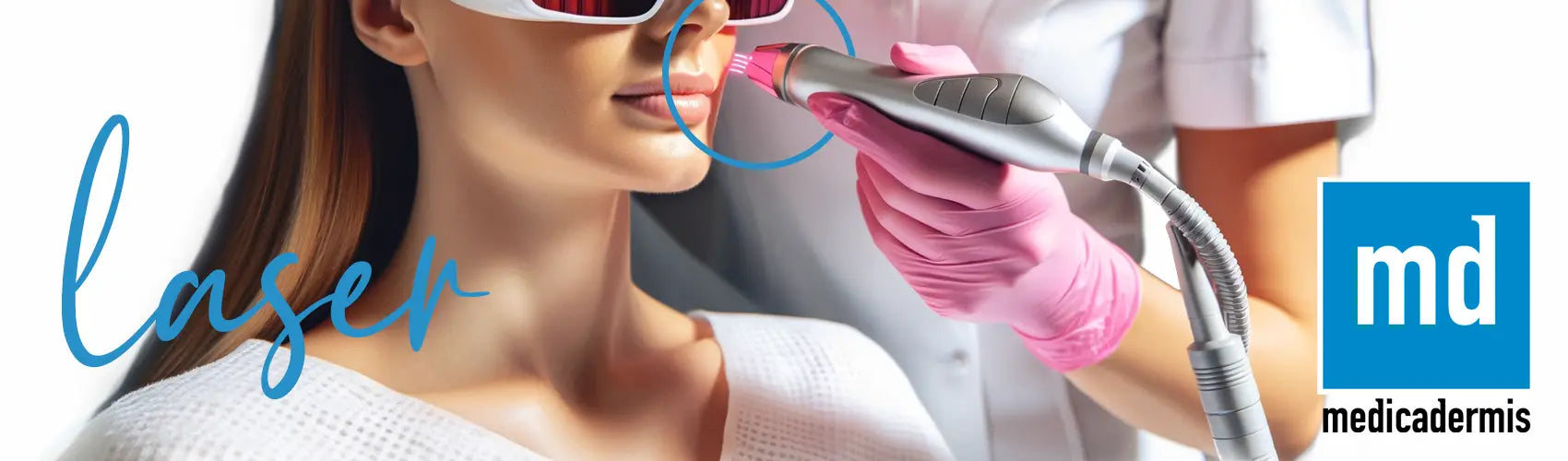
The treatment duration depends on the area to be treated. First, the skin is cleansed and disinfected. Next, the settings are determined. After this, you will be given protective goggles. The laser head is placed on the skin. You will feel warm pricks during the pulsing. The treatment is sensitive. During the treatment, the skin will become red and swollen, and some blood may be released. Cooling is permitted after the treatment. The skin may remain swollen for up to approximately 2 days and red for up to approximately 5 days.
After how many treatments can you expect results?
After the first treatment, you will already see a change in the texture of the skin. For optimal results, 3-5 treatments are needed with an interval of 4-6 weeks. However, the natural regeneration process of the skin takes a total of 6 months after the last treatment.
Naturally, the skin's aging process cannot be stopped, and you will need to maintain the result. One or two maintenance treatments per year are recommended. However, maintenance can also be achieved using other methods.
Advice for treatment
- Prior to the treatment, you must stay out of the sun for at least 4 weeks and use a high SPF, at least factor 30. If you are tanned, it is preferable to wait a few more weeks before the laser treatments, until your original skin color has returned. If this advice is not followed, the risk of complications is higher. If in doubt, it is better to reschedule the appointment.
- This also applies to the use of self-tanner or tanning spray beforehand in the period before/between the treatments.
- For pigmented skin, pigment-suppressing creams can be applied preventively.
- If you frequently suffer from cold sores, it is advisable to start prophylaxis against Herpes Simplex (cold sores) before the treatment. You should start this one day before the treatment and complete the course.
- Do not undergo any professional chemical peels or microdermabrasion treatments 4 weeks prior to the treatment.
- Stop using home peeling products 2 weeks prior to the treatment.
- Smoking and vaping prevent skin repair and damage the collagen network. For optimal results, it is better to quit smoking.
Advice after the treatment
- After the treatment, the skin is red and swollen. The skin may feel as if it is sunburned. Cooling is allowed after the treatment.
- After the treatment, a special nourishing cream that does not clog the pores may be applied. This is because there is a lot of heat in the skin.
- From the next day, the skin may be cleansed with a mild cleanser.
- Medical camouflage may be applied after 2-3 days.
- Handle the skin gently; avoid scratching, rubbing, and scrubbing the skin. Also, avoid scrubbing the skin.
- Daily use of a sunscreen with at least SPF30 must be applied.
Treatment of Vascular Disorders
Our long pulse ND:YAG laser is the treatment for reducing leg veins, venous lakes, hemangiomas, spider nevi, and spider veins. This laser targets vascular conditions with precision and works by heating the blood in the problematic vessels, causing them to contract and be cleared away by the body.
Who is the treatment suitable for?
The treatment can be applied to vascular disorders, such as the leg veins, venous lake, (age-related) hemangiomas, and spider nevus.The treatment
First, an intake is conducted during which the treatment is discussed. The skin is examined and the settings are determined. Before the treatment begins, the eyes are covered with protective goggles. Gel is applied for conductivity, and the treatment can begin.During the treatment, pulses are applied to the area to be treated. These pulses generate energy that is converted into heat, which is the red color of the blood. The heat damages the protein structures in the vessel walls, causing the vessels to contract, and the body neatly clears away the shrunken vessels.
When the pulse is applied, it feels like warm pricks or rubber bands being snapped against the skin. Most people tolerate the treatment without anesthesia. After the treatment, the treated area is red and may be slightly swollen. Cooling is permitted after the treatment.
After how many treatments do you see results?
You will be able to observe the first results after approximately 2-4 weeks. Depending on the severity of the condition, 3-5 treatments are required for the desired result. For leg veins, the recovery time is 8 weeks, and the treatment may only be repeated after 8 weeks. The cause of the formation of small veins, such as gravity, aging, hereditary predisposition, etc., cannot be eliminated. As a result, there is a chance that new veins will develop in the future. Therefore, please bear in mind that occasional maintenance treatments will be necessary in the coming years.Advice for treatment
- Prior to the treatment, you must keep the area to be treated out of the sun for at least 4 weeks. If you go outside, you must use an SPF of at least factor 30. If you are tanned, it is preferable to wait a few more weeks before the laser treatments, until your original skin color has returned. If this advice is not followed, the risk of complications is higher. If in doubt, it is better to reschedule the appointment.
- This also applies to the use of self-tanner or tanning spray beforehand in the period before/between the treatments.
Advice after the treatment
- Stay out of direct sunlight for at least 4 weeks after the treatment and use a sunscreen with an SPF 30 or higher every day during the treatment period, otherwise you run a higher risk of pigment changes in the skin.
- After the treatment, the treated area may be red and swollen for up to three days.
- Do not apply a sealing cream to the treated area for the first 24 hours, so that the heat can dissipate from the skin.
- Avoid hot showers, the sauna, intense exercise, and drinking alcohol for the first 24 hours. This is due to vasodilation.
- In some cases, you are advised to wear compression stockings after the treatment.
Tattoo and Pigment Removal
For the removal of dark tattoos and the treatment of pigment disorders, we offer the Q-switched ND:YAG laser treatment. This laser works by using specific wavelengths that target ink and pigment in the skin, causing them to fragment and be naturally removed by the body.
Who is the treatment suitable for?
The treatment can be used to remove dark tattoos and pigment disorders.The treatment
First, an intake is conducted and the treatment is discussed. The tattoo is examined and the settings are determined. Before the treatment begins, the eyes are covered with protective goggles. Next, the laser is placed on the tattoo and the entire area is carefully treated.The pulse causes mechanical damage to the tattoo ink, ensuring that only the ink is heated. The pulse creates small explosions under the skin that shatter the encapsulated ink. The small ink particles are cleared away by the body itself in the weeks following the treatment. The treatment can be painful. During the treatment, a white haze forms over the tattoo, which is the desired reaction. An area the size of an A5 can be treated per session.
Over time, the white haze will fade, and the skin will swell and turn red. The skin is cooled after the treatment, after which it is covered with a sterile gauze. The redness and swelling may persist for 3-7 days after the treatment. Larger tattoos will need to be treated in multiple sessions. This is due to the body's absorption capacity.
The pigment is examined and the settings are determined. Before the treatment begins, the eyes are covered with protective goggles. Next, the laser is placed on the skin and the area is carefully treated. The pulse causes mechanical damage to the deeper-lying pigment. This results in damage to the pigment cells, causing them to die. Cooling is permitted after the treatment. The spots will initially darken, after which they will gradually flake off with the skin's normal exfoliation; this will take between 7 and 10 days.
After how many treatments is a result visible?
On average, 6-10 treatments are required to treat a tattoo, with an interval of 6-8 weeks. The result depends on several factors: color, depth, location, and the age of the tattoo. It is possible that the tattoo cannot be 100% removed and that a slight haze of ink remains visible on the skin. For the treatment of pigment, there is an interval of 4-6 weeks. The number of treatments depends on the color; the darker the color, the more treatments will be required.Advice for treatment
- Prior to the treatment, you must keep the area to be treated out of the sun for at least 4 weeks. If you go outside, you must use an SPF of at least factor 30. If you are tanned, it is preferable to wait a few more weeks before the laser treatments, until your original skin color has returned. If this advice is not followed, the risk of complications is higher. If in doubt, it is better to reschedule the appointment.
- This also applies to the use of self-tanner or tanning spray beforehand in the period before/between the treatments.
Advice after the treatment
- Cooling may be applied immediately after the treatment. Additionally, this may be done at home if needed.
- Drinking plenty of water after the treatment is good to help the body eliminate waste products.
- The skin does not need to be cleansed on the first day after the treatment. After 24 hours, the bandage may be removed and the treated area cleaned with antibacterial soap.
- Sometimes small blisters form on the treated skin. This is not a problem. They contain clear tissue fluid. The blisters will dry out on their own and form a scab. It is better not to puncture them.
- As long as the skin is not closed, do not shower or bathe for long periods, and do not swim. Additionally, pat the skin dry with a clean towel.
- After the treatment, apply Alhydran, Lamiderm, or Bepanthen daily. This ointment should be used as long as the skin is still healing. Do not apply body lotion, perfume, or makeup to the treated area.
- Stay out of direct sunlight for at least 4 weeks after the treatment and use a sunscreen with an SPF 30 or higher every day during the treatment period, otherwise you run a higher risk of pigment changes in your skin.
Filters